Custom Warehouse Management System: Build Your Own WMS
Wiki Article
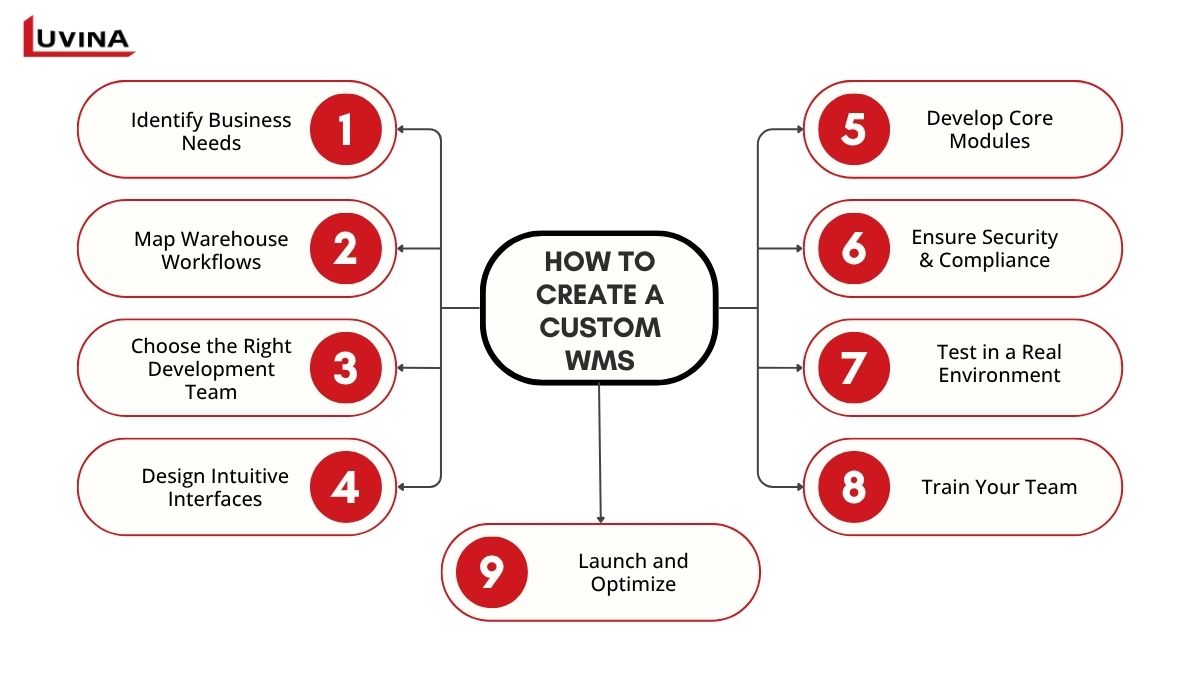
Traditional warehouse management solutions are failing as supply chains get more complicated and cost-cutting demands grow. For example, in industries like retail, F&B, and manufacturing, where SKU counts are high and fulfillment timelines are tight, traditional WMS often can’t keep up with real-time visibility or custom workflows. More businesses are hence adopting a custom warehouse management system, a solution designed to fit their specific operational needs and processes.
This post will cover what a custom WMS is, why it is becoming so important in the modern logistics environment, and how you might create one that promotes create wms automation, lowers expenses, and scales together with your company. Beginning here, if you want to future-proof your warehouse activities.
What Is a Custom Warehouse Management System?
Designed to improve every step of warehouse operations – from receiving and storing goods to picking, packing, and shipping – a custom warehouse management system is a tailored software solution. Unlike generic WMS solutions, a customized WMS software is created to suit a company’s particular processes, storage methods, and operational demands.
The main objective of any Warehouse Management System (WMS) is to automate warehouse operations, therefore enhancing accuracy, lowering costs, and reducing manual effort. By providing capabilities and interfaces tailored to your warehouse’s real-world circumstances, a custom solution goes beyond this. Usually, these systems provide companies with a unified and extremely flexible management setting by merging flawlessly with external tools like ERP, shipping, or inventory platforms. Report this wiki page